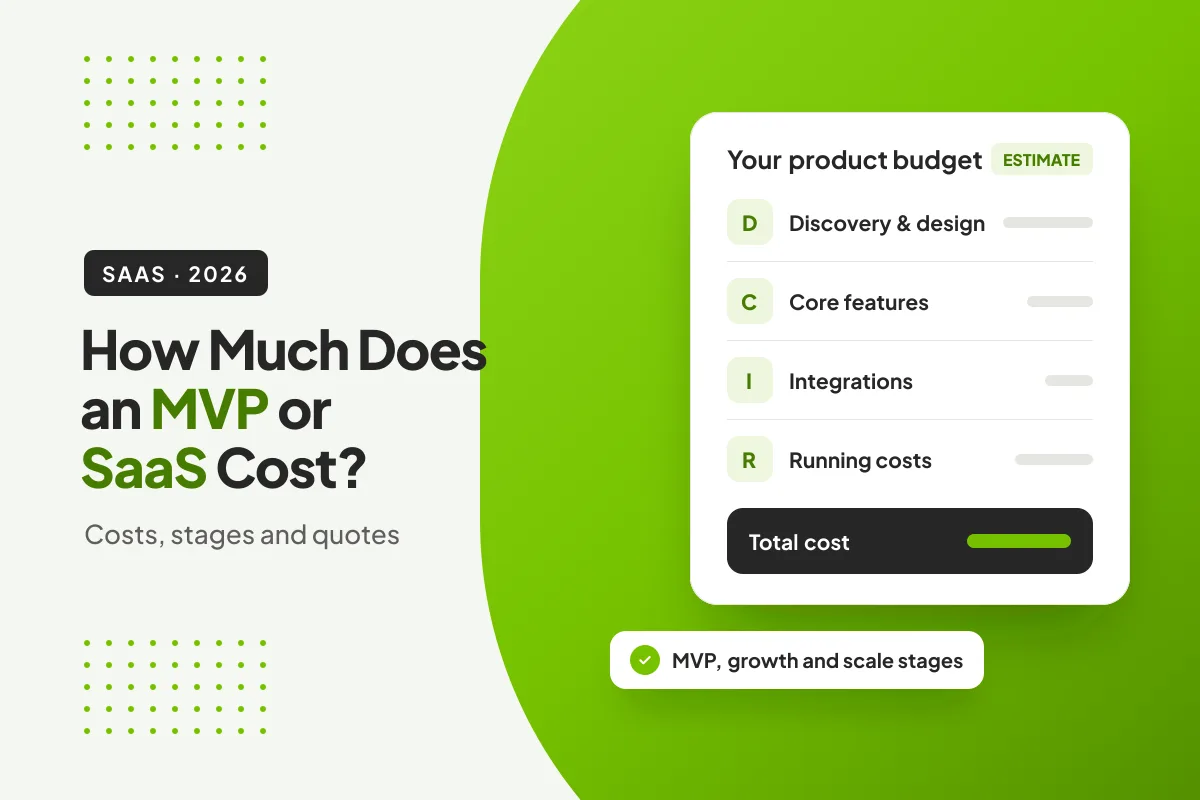
The cost of building an MVP or SaaS product depends on three things: how many features the first version needs, how complex those features are, and who builds them. A focused MVP that proves one core workflow costs far less than a full SaaS platform with billing, user roles, dashboards and integrations. Running costs such as hosting, email and payment processing come on top and grow with your users.
With Shreeji Software, an MVP starts at $2,500, a complete Growth Product starts at $5,000 and a Scale Platform starts at $10,000, with the final price based on your scope. This guide explains what each stage includes, what drives the cost up or down, the running costs to plan for and how to get an accurate quote.
MVP and SaaS cost at a glance
| Stage | What it is for | Typical scope | Shreeji Software starting price |
|---|---|---|---|
| MVP | Validating an idea with real users | Discovery, feature planning, UI/UX direction, a responsive web app with the core workflow, database and API setup, deployment support | From $2,500+ |
| Growth Product | A complete product you can sell | Custom web application with authentication, dashboard, database, API integrations, admin tools and deployment | From $5,000+ |
| Scale Platform | An advanced product built for growth | Custom architecture, advanced dashboards, multiple user roles, an integration ecosystem, a scalable back end and technical documentation | From $10,000+ |
These are starting points, not fixed prices. Final pricing depends on scope, functionality, content, integrations and timeline.
What is an MVP, and how is it different from a SaaS product?
An MVP (minimum viable product) is the smallest version of your product that lets real users complete the main task and gives you evidence that people want it. It is deliberately limited: one core workflow, simple account management and just enough design to be usable and trustworthy.
A SaaS product is software that customers pay to use, usually by subscription. On top of the core workflow, it needs the parts that let you run it as a business: sign-up and login, plans and billing, user roles and permissions, an admin area, email notifications, analytics, and the security and reliability that paying customers expect.
Many products start as an MVP and grow into a full SaaS platform in stages. Planning for that path from the start keeps the first version affordable without having to rebuild it later.
What drives the cost of an MVP or SaaS product?
1. Number and complexity of features
This is the biggest factor. A feature that lets users fill in a form and see a list is quick to build. A feature that calculates prices, syncs with another system, handles files or works in real time takes much longer. The clearer and shorter your feature list for version one, the lower the cost.
2. User roles and permissions
A product with one type of user is simpler than one with customers, team members, managers and administrators who each see different data and actions. Every role adds screens, rules and testing.
3. Design depth
An MVP can use a clean, consistent interface built from a small set of components. A product aimed at a competitive market may need user research, detailed prototypes and a full design system. Our UI/UX design team can match the depth of design to the stage of your product.
4. Integrations
Payments, email, CRMs, accounting tools, calendars, maps and AI services all come with their own APIs, limits and edge cases. Each integration adds build and testing time, and some add monthly fees from the provider.
5. Billing and subscriptions
Charging customers sounds simple, but a SaaS product usually needs plans, trials, upgrades, downgrades, invoices, failed-payment handling and tax settings. Payment providers such as Stripe Billing handle much of this, but the product still has to connect to it correctly.
6. Data, security and compliance
Products that store personal, financial or health data need stronger access controls, audit logs and data-handling rules. If your customers are in regulated industries or regions with strict privacy laws, plan for this from the start rather than adding it later.
7. Platforms
A responsive web application works on desktop and mobile browsers and is usually the most cost-effective way to launch. Native iOS and Android apps add separate builds, app store reviews and ongoing updates, so many products start on the web and add native apps once demand is proven.
8. Who builds it
A freelancer, an agency and an in-house team have very different costs and risks. Our guide to hiring a freelancer or an agency compares the options. What matters most is that the team can cover product planning, design, front end, back end, testing and deployment, and that you own the code at the end.
Running costs to plan for after launch
The build is a one-off cost, but a live product has ongoing costs. Most of them are small at first and grow with your users.
| Running cost | What it covers | How it is usually charged |
|---|---|---|
| Hosting and database | The servers and database that run the application | Monthly, based on usage |
| Domain and email | Your web address and transactional emails such as sign-up confirmations | Yearly (domain), monthly or per email sent |
| Payment processing | Card and wallet payments for subscriptions | A fee per transaction, set by the provider |
| Third-party services | Maps, analytics, AI models, file storage and other APIs | Monthly plans or pay as you go |
| Maintenance and support | Bug fixes, security updates, monitoring and small improvements | Monthly retainer or hourly |
| New features | The roadmap after launch | Per release, or a dedicated developer or team |
How to keep your MVP cost under control
- Start with one core workflow. Write down the single task your first users must be able to complete, and build only what that task needs.
- Separate "must have" from "nice to have". Put everything else on a roadmap for later releases.
- Use proven services instead of building them. Authentication, payments and email are better handled by established providers than built from scratch.
- Launch on the web first. A responsive web app reaches desktop and mobile users with one build.
- Design once, reuse everywhere. A small set of reusable components keeps design and development consistent and faster.
- Plan the architecture for growth. A clean structure costs little more at the start and avoids an expensive rebuild when you add users and features.
- Ship in stages. Agree on milestones so you see working software early and can change direction before more budget is spent.
Common mistakes that increase the cost
- Building the full vision as version one. Every extra feature delays launch and the feedback you need.
- Skipping discovery. Unclear requirements lead to rework, which is the most expensive way to build software.
- Choosing the cheapest quote without checking scope. Compare what each quote includes: design, testing, deployment, documentation and support.
- Not owning your code and accounts. Keep the repository, hosting, domain and third-party accounts in your company's name.
- Forgetting running costs. Budget for hosting, services and maintenance from the first month.
How to get an accurate MVP or SaaS quote
The more clearly you describe the product, the more accurate the quote. Before you ask for one, prepare:
- The problem you are solving and who the users are
- The core workflow for version one, step by step
- The user roles and what each one can do
- The integrations you need, such as payments, CRM or email
- Whether you need web only or native mobile apps too
- Any designs, wireframes or competitor products you like
- Your timeline and a budget range
Build or hire: two ways to work with us
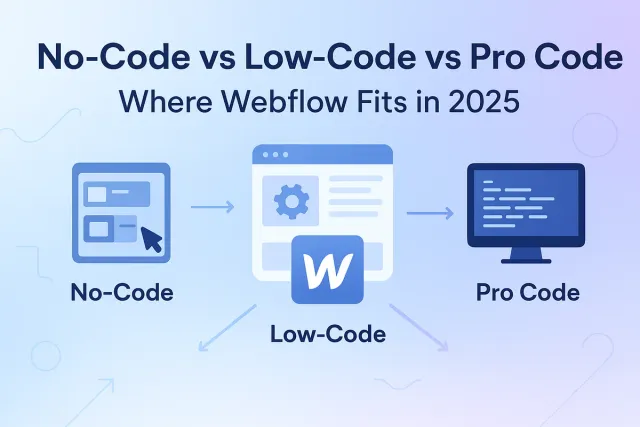
For a defined first version, a fixed-scope project is usually the simplest choice: we agree on the features, timeline and price, then build and launch. For a product with an ongoing roadmap, many founders prefer to hire a dedicated team or a single Next.js developer who works as part of their team, on a full-time (160 hours a month), part-time (80 hours a month) or hourly plan. Not sure whether you need custom code at all? Our comparison of no-code, low-code and pro-code can help.
Building your MVP or SaaS product with Shreeji Software
Shreeji Software is an in-house team with more than 15 years of experience. We plan the product with you, design the screens, then build it with React, Next.js and Node.js on an architecture that can grow, with regular releases and full ownership of the code. See our SaaS and software development services, or browse our portfolio of real projects.